
RudeFish
鲁 德 菲 西
Image–Text Relations
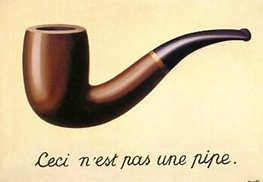
During my study at UAL, I attended a workshop titled Image/Text Relations & Creative Writing Approaches, which became an important point of departure for understanding how language and image can coexist without simply explaining one another. The session introduced four primary modes of relation: correspondence, expansion, juxtaposition, and sequence, each proposing a different way to activate meaning between text and image. I was particularly drawn to juxtaposition, where words and visuals resist each other instead of agreeing. This friction produces ambiguity, irony, and tension, which feel closer to how thought and perception actually unfold.
The workshop also introduced ten creative writing approaches, including fragmented prose, montage, critical fabulation, and auto-fiction. These encouraged me to treat writing as an artistic material rather than a descriptive tool, allowing language to perform, interrupt, and distort instead of clarifying. This approach has shaped my visual practice: captions, prompts, and textual fragments now operate as unstable subtitles rather than explanations.
Another crucial insight from the workshop was that form determines meaning. The way a work is presented—the fold of a zine, the rhythm of a montage, or the arrangement of subtitles—constitutes part of its content. This idea resonates deeply with my practice, where writing formats such as prompts or dialogue fragments become integral to the visual composition itself.
Through this experience, I began to view writing as an invisible framework that shapes how images are perceived. The boundary between text and image became porous, and what once functioned as illustration or caption turned into a site of negotiation, where meaning flickers, contradicts, and occasionally collapses.